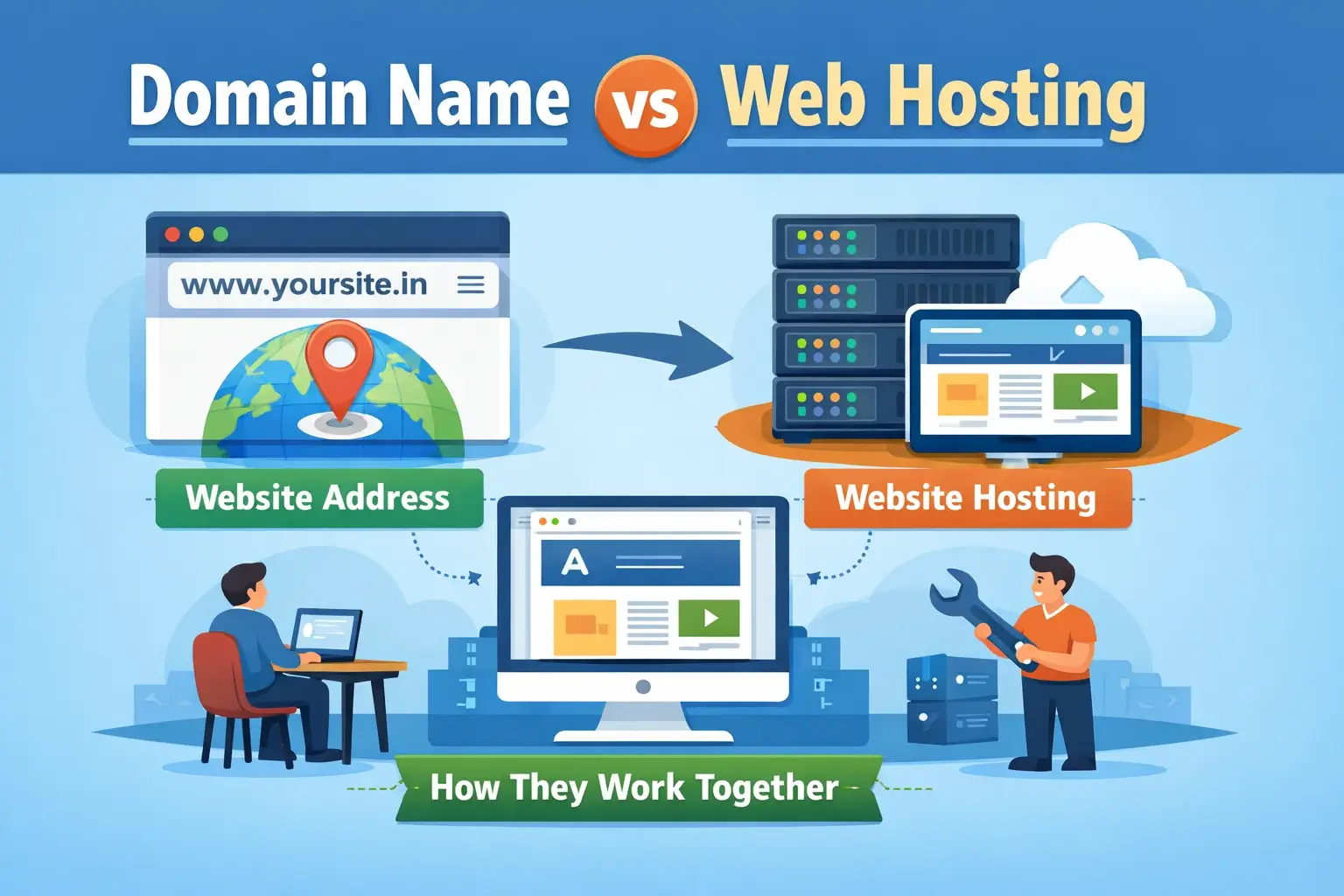
If you’re planning to build a website, two terms come up almost immediately: Domain Name vs Web Hosting. They’re closely connected, but they are not the same thing. Understanding how each works—and how they work together—helps you make better decisions when launching or managing a website.
In this guide, we’ll explain the difference in plain language, using simple examples and India-specific pricing so everything is clear from the start.
What Is a Domain Name?
A domain name is the web address people type into their browser to visit your site, such as example.in. It’s a human-friendly name that points visitors to the correct location on the internet.
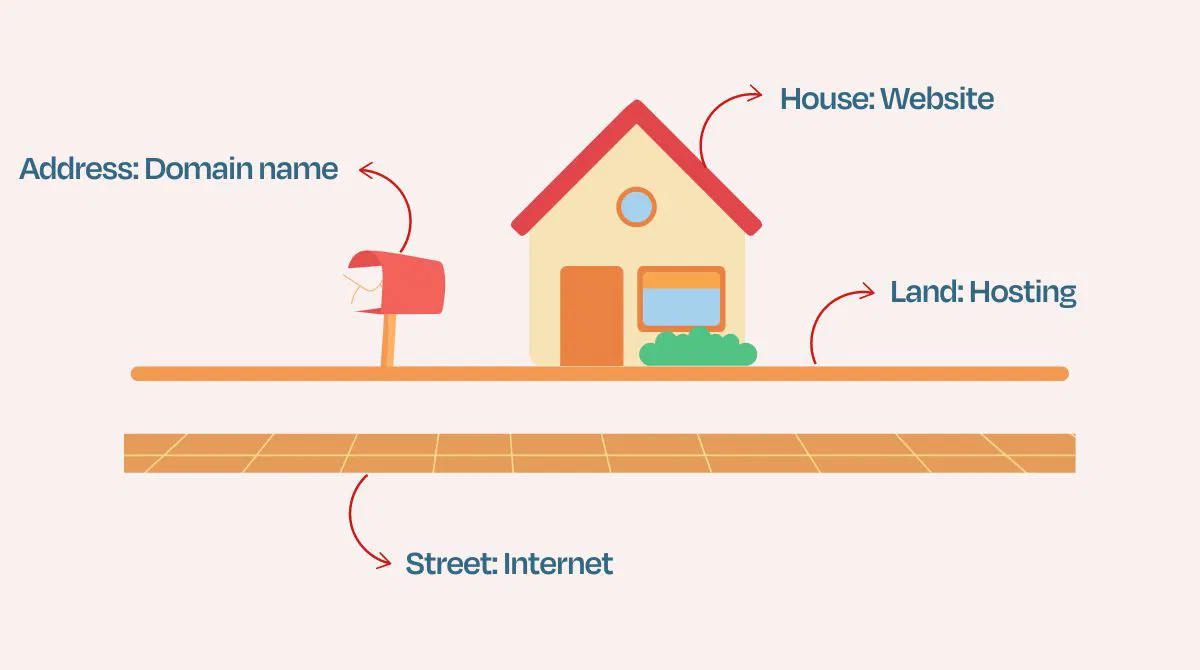
Think of a domain name as your website’s address.
Key points:
- It’s registered through a domain registrar.
- You don’t “own” it forever—you renew it yearly.
- Popular Indian extensions include
.in,.co.in, and.com.
At WebHostingPeople, domain registration is handled directly, and .in domains are available at ₹555 per year, with registrar accreditation for Indian domains.
What Is Web Hosting?
Web hosting is the service that stores your website’s files—images, text, code—and makes them accessible online. When someone types your domain name, hosting delivers the website content to their screen.
Think of web hosting as your website’s home.
Common hosting types:
- Shared hosting (budget-friendly for small sites)
- VPS hosting (more control and resources)
- Cloud hosting (scalable and flexible)
- Dedicated servers (high-traffic websites)
Beginner guide to web hosting types
Domain Name vs Web Hosting: Key Differences
(Primary keyword used once in a subheading)
| Feature | Domain Name | Web Hosting |
|---|---|---|
| Purpose | Website address | Stores website files |
| Example | yourbrand.in | Server space where site lives |
| Bought From | Domain registrar | Hosting provider |
| Renewal | Yearly | Monthly or yearly |
| Typical India Cost | ₹500–₹1,000/year | ₹100–₹500/month |
Short version:
A domain tells people where your site is. Hosting stores what your site is.
How Domain and Hosting Work Together
A domain name on its own shows nothing. Hosting without a domain is not accessible to visitors.
They connect using DNS (Domain Name System) settings:
- Visitor enters your domain name.
- DNS points the domain to your hosting server.
- Hosting delivers your website content.
This connection is what makes your website visible online.
Do You Need to Buy Them Together?
No. You can:
- Buy a domain from one provider.
- Buy hosting from another.
- Connect them later using DNS.
Many beginners prefer one provider for simplicity, but technically they are independent services.
People Also Ask
Is a domain name the same as hosting?
No. A domain is an address; hosting is storage. You need both to run a website.
Can I change my hosting without changing my domain?
Yes. You can move hosting and simply update DNS records.
How long does domain registration last?
Usually one year per term, renewable annually.
Is .in good for Indian websites?
Yes. .in domains are ideal for businesses and audiences in India.
Example: Starting a Website in India
A small business website might look like this:
- Domain:
mybusiness.in– ₹555/year - Hosting: Shared hosting – approx. ₹200–₹300/month
- Total yearly cost: Around ₹3,000–₹4,000 (approx.)
This setup works well for blogs, portfolios, and small business sites.
FAQs
Can I buy a domain without hosting?
Yes. Many people register domains first and add hosting later.
What happens if my domain expires?
Your website and email stop working until it’s renewed.
Do I need hosting for WordPress?
Yes. WordPress requires hosting to store files and databases.
Can one hosting plan run multiple domains?
Yes, depending on the hosting plan’s limits.
Understanding the difference between Domain Name vs Web Hosting makes website setup much simpler. A domain is your online address, while hosting is the space where your website lives. Both are essential, and choosing them thoughtfully—based on your needs and budget—sets a solid foundation for your site.
If you’re starting in India, choosing a reliable registrar and practical hosting plan can keep costs manageable while ensuring long-term stability.