
Choosing between managed vs unmanaged hosting is one of the most common questions people face when setting up a website. The difference isn’t about speed or brand names—it’s about responsibility, control, and how much technical work you want to handle yourself.
This guide explains the real, practical differences in simple terms, with India-specific examples, so you can decide what actually fits your needs.
What Does “Managed” and “Unmanaged” Hosting Mean?
At a basic level, the difference is who takes care of the server.
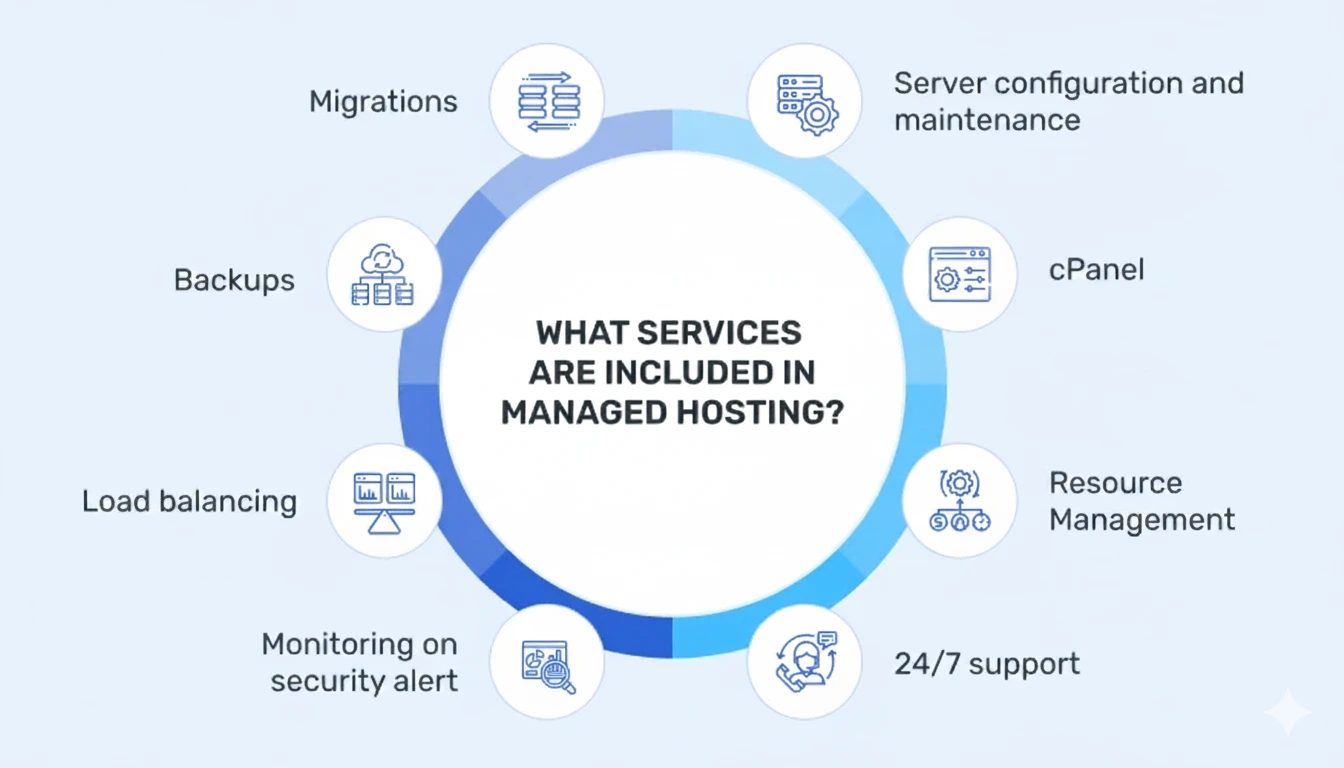
- Managed hosting: The hosting provider handles server setup, updates, security, and maintenance.
- Unmanaged hosting: You get the server, and everything else is your responsibility.
Both types can run the same websites. The experience of managing them is very different.
Managed vs Unmanaged Hosting: Core Differences
1. Server Management Responsibility
- Managed hosting includes OS updates, security patches, monitoring, and backups.
- Unmanaged hosting requires you to install, configure, secure, and maintain everything.
If you don’t enjoy working with servers, unmanaged hosting can quickly become stressful.
2. Technical Skill Required
- Managed hosting works well for beginners, bloggers, businesses, and agencies.
- Unmanaged hosting suits developers and system administrators comfortable with Linux, SSH, and server hardening.
3. Support Scope
- Managed hosting support helps with server-related issues.
- Unmanaged hosting support usually stops at hardware or network availability.
4. Control and Customization
- Unmanaged hosting gives full control over the server environment.
- Managed hosting may limit certain low-level changes to keep systems stable.
Managed vs Unmanaged Hosting (Cost Comparison – India)
| Feature | Managed Hosting | Unmanaged Hosting |
|---|---|---|
| Monthly cost (India) | ₹600 – ₹3,000+ | ₹300 – ₹1,500 |
| Server setup | Included | Self-managed |
| Security & updates | Included | Self-managed |
| Backups | Often included | Manual or paid |
| Technical knowledge needed | Low | High |
| Best for | Businesses, blogs, stores | Developers, sysadmins |
While unmanaged hosting looks cheaper, time and risk often increase the real cost.
Managed vs Unmanaged Hosting: Which One Is Right for You?
(Primary keyword used naturally in one subheading)
Choose managed hosting if:
- You want to focus on content or business, not servers
- Downtime or security issues would hurt your work
- You prefer predictable costs
Choose unmanaged hosting if:
- You are comfortable managing Linux servers
- You need full control over configurations
- You enjoy optimizing and maintaining infrastructure
There is no “better” option—only what matches your skills and goals.
Real Example: Small Business Website in India
A local business website using WordPress usually benefits from managed hosting:
- Faster issue resolution
- Automatic updates
- Lower risk of security problems
In contrast, a SaaS developer testing custom server setups may prefer unmanaged hosting for flexibility.
Domains and Hosting: One Practical Note
If you’re planning a website for the Indian market, choosing a .in domain is often helpful for local identity and trust.
WebHostingPeople is an accredited registrar for .in domains, currently available at ₹555 per year. This can be useful when setting up a new site alongside hosting.
register a .in domain in India
People Also Ask
Is managed hosting faster than unmanaged hosting?
No. Speed depends on server resources and configuration, not whether hosting is managed.
Why is managed hosting more expensive?
You’re paying for time, expertise, monitoring, and reduced risk—not just server space.
Can I switch from unmanaged to managed hosting later?
Yes. Many site owners upgrade once maintenance becomes time-consuming.
Is unmanaged hosting unsafe?
Not inherently—but security depends entirely on how well you manage the server.
Helpful Reading
How to choose web hosting for a new website?
shared vs VPS hosting explained
Frequently Asked Questions
Do beginners need managed hosting?
Most beginners find managed hosting easier and safer.
Is unmanaged hosting good for WordPress?
Only if you’re comfortable managing security, updates, and performance manually.
Can managed hosting handle high traffic?
Yes, depending on the plan and resources.
Is managed hosting worth it for small sites?
Often yes, because it saves time and reduces technical issues.
The choice between managed and unmanaged hosting isn’t about features—it’s about who does the work. Managed hosting trades control for convenience, while unmanaged hosting trades convenience for flexibility.
Understanding your technical comfort level and time availability will lead you to the right decision—without overthinking it.