When a domain expires, it does not disappear immediately. Instead, it goes through a well-defined lifecycle where the original owner still has chances to renew it before it becomes available to someone else. Understanding what happens when a domain expires is important for website owners, businesses, and anyone planning to register a domain in the future.
This guide explains the full domain expiration process in simple terms, with timelines, costs, and India-specific examples.
Understanding What Happens When a Domain Expires
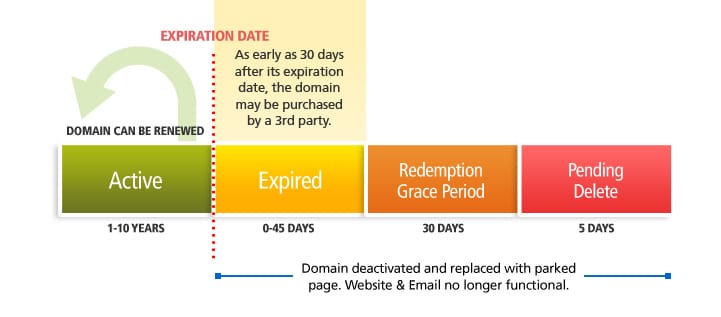
When you register a domain, you lease it for a fixed period (usually one year). If you do not renew it before the expiry date, the domain moves through several stages before it is released back to the public.
Below is the typical lifecycle followed by most registrars.
Domain Expiration Lifecycle Explained (Step by Step)
1. Active Period
- The domain is registered and fully functional.
- Websites, emails, and DNS services work normally.
- You can renew the domain at any time during this period.
2. Grace Period (0–30 Days After Expiry)
- The domain may stop working, depending on the registrar.
- The original owner can still renew the domain at the regular renewal price.
- No one else can register the domain during this time.
Good to know:
Some hosting providers keep websites online for a few days as a courtesy, but this is not guaranteed.
3. Redemption Period (Usually 30 Days)
- The domain is removed from the zone file.
- Website and email stop completely.
- The owner can still recover the domain, but with an extra redemption fee.
4. Pending Delete (5–7 Days)
- The domain cannot be renewed or recovered.
- No one can register it yet.
- The domain is scheduled for deletion.
5. Available for Re-registration
- The domain is released to the public.
- Anyone can register it on a first-come, first-served basis.
Domain Expiry Timeline at a Glance
| Stage | Duration | Can Owner Renew? | Extra Cost |
|---|---|---|---|
| Active | Registration period | Yes | No |
| Grace Period | 0–30 days | Yes | No |
| Redemption Period | ~30 days | Yes | Yes |
| Pending Delete | 5–7 days | No | Not possible |
| Available | — | No | New registration |
What Happens to Your Website and Email?
When a domain expires:
- Your website may stop loading.
- Business email addresses (e.g., [email protected]) stop working.
- Visitors may see parking pages or error messages.
- SEO rankings can drop if downtime continues.
Even a short lapse can affect search visibility and user trust.
What Happens to Expired .IN Domains in India?
.IN domains follow a similar lifecycle to global domains but are managed under Indian registry rules.
- Grace and redemption periods still apply.
- Once released, premium or short .in domains can be registered quickly by others.
- Prices for new registrations are usually affordable.
At WebHostingPeople, .IN domains are available at ₹555 per year, and we are an accredited registrar for .IN domains.
Can Someone Else Buy My Expired Domain?
Yes, if:
- You do not renew during the grace period, and
- You do not recover it during the redemption period
Once the domain is released, anyone can register it. This includes competitors, domain investors, or automated systems that monitor expiring domains.
People Also Ask
How long after expiry is a domain released?
Usually between 60–75 days after expiry, depending on the registry and registrar.
Can I renew my domain after it expires?
Yes, during the grace period at normal cost, and during redemption with an additional fee.
Do expired domains lose SEO value?
Yes. Long downtime can cause search engines to drop rankings and de-index pages.
Are expired domains immediately available?
No. They must pass through grace, redemption, and pending delete stages first.
Tips to Avoid Losing a Domain
- Enable auto-renewal with a valid payment method.
- Keep your email address updated with your registrar.
- Register domains for multiple years if they are business-critical.
- Set personal calendar reminders before expiry.
Trusted Reference
official ICANN domain lifecycle explanation
FAQs
What happens if I forget to renew my domain?
Your domain enters the grace period, where you can still renew it without extra cost.
Is redemption always available?
Most registrars offer it, but fees and availability vary by extension.
Can expired domains be stolen?
They are not stolen, but legally re-registered once released.
How much does it cost to re-register a .IN domain?
Standard pricing applies. For example, .IN domains start at ₹555 per year at WebHostingPeople.
Understanding what happens when a domain expires helps you protect your online identity and avoid unnecessary downtime. Domains follow a predictable lifecycle, and missing renewal deadlines can lead to permanent loss. With simple precautions like auto-renewal and timely monitoring, you can ensure your domain stays safely in your control.