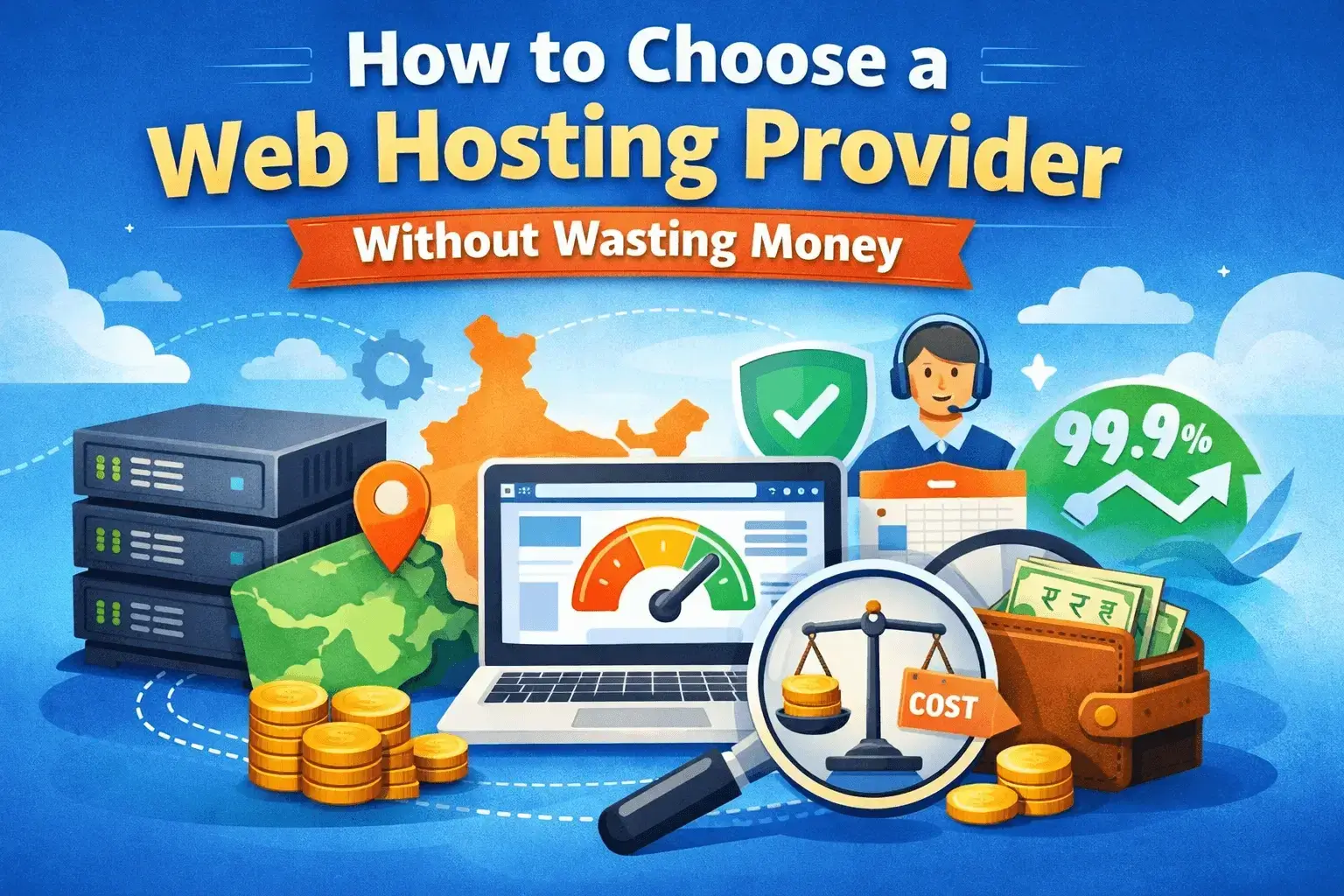
If you are building a website for the first time, knowing how to choose a web hosting provider can save you both money and frustration. Many beginners end up paying for plans that are too powerful for their needs or locked into long-term contracts they don’t understand. This guide explains what actually matters, especially for website owners in India.
Understand what your website really needs
Before comparing hosting companies, take a few minutes to understand your own website goals. This step alone prevents unnecessary spending.
Ask yourself:
- Is this a personal blog, business website, or portfolio?
- Will traffic be low in the first year?
- Do you need email accounts or only website hosting?
- Are you using WordPress?
For example, a basic WordPress blog with 5,000 monthly visitors does not need advanced hosting. Many beginners make the mistake of upgrading too early.
shared hosting vs VPS explained simply
How to choose a web hosting provider without overpaying
Instead of focusing on advertisements or discounts, look at practical value.
Server location and speed
Choose hosting with servers in India or nearby regions. This improves loading speed for Indian visitors and keeps your website responsive.
Uptime reliability
A reliable host should offer at least 99.9% uptime. Frequent downtime affects user trust and search visibility.
Customer support quality
Support matters more than extra features. Look for providers that offer 24/7 support and respond clearly to basic questions.
Transparent renewal pricing
Low introductory prices are common, but renewals are often much higher. Always check the renewal amount before paying.
Google’s guidance on website performance and reliability
Hosting prices in India (realistic comparison)
Here is a simple price range based on common Indian hosting plans:
| Hosting Type | Suitable For | Approx. Monthly Cost |
|---|---|---|
| Shared Hosting | Blogs & small sites | ₹120 – ₹300 |
| WordPress Hosting | Managed WordPress sites | ₹250 – ₹600 |
| VPS Hosting | Growing businesses | ₹1,200 – ₹3,000 |
| Cloud Hosting | High-traffic websites | ₹2,000+ |
If your website is new, shared or basic WordPress hosting is usually enough.
managed WordPress hosting options
Features you can safely avoid at the beginning
Many hosting plans include features that sound important but are not necessary early on:
- Dedicated IP address
- Advanced caching tools
- Premium security add-ons
Pay only for what your website actually uses. You can always upgrade later.
People Also Ask: common hosting questions
Is free web hosting reliable?
Free hosting is suitable only for testing or learning. It often includes ads, slow speeds, and limited control.
How much storage does a new website need?
Most new websites use less than 1 GB of storage in the first year.
Can I switch hosting providers later?
Yes. Most hosting companies allow migration, and many offer free transfers.
Does hosting affect SEO?
Indirectly, yes. Poor speed and downtime can negatively affect user experience and rankings.
When website maintenance becomes more important than upgrades
As your website grows, maintenance tasks like backups, updates, and security checks become more important than upgrading hosting too early. Some site owners prefer staying on affordable hosting while using website maintenance and support services to keep things running smoothly.
website maintenance and support services
FAQs
Which hosting type is best for beginners in India?
Shared hosting or basic WordPress hosting is usually sufficient for beginners.
Should I buy hosting for multiple years?
A one-year plan is safer when starting. Upgrade only after gaining experience.
Do I need daily backups from day one?
Weekly backups are enough for new websites. Daily backups become important later.
Is WordPress hosting mandatory for WordPress websites?
No. Regular hosting works fine, but WordPress hosting can simplify management.
Conclusion
Learning how to choose a web hosting provider is about matching your needs with the right plan, not buying the biggest option available. Start small, focus on reliability and support, and avoid unnecessary features. A thoughtful choice now will save money and make website management easier as your site grows.